




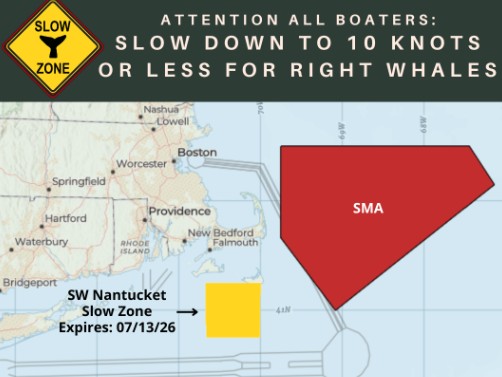
 NANTUCKET – A new voluntary slow-speed zone has been established for boaters southwest of Nantucket after endangered North Atlantic right whales were detected in the area, according to the National Oceanic and Atmospheric Administration (NOAA).
The advisory was issued after the Woods Hole Oceanographic Institution’s Martha’s Vineyard buoy detected the presence of right whales on Sunday, June 28. The voluntary Right Whale Slow Zone will remain in effect through July 13.
NOAA is asking all mariners traveling through the designated area to either avoid it altogether or reduce their speed to 10 knots or less while transiting through the zone.
The agency says vessel strikes remain one of the leading causes of injury and death for the critically endangered North Atlantic right whale. Slower vessel speeds significantly reduce the severity of collisions and give boat operators more time to spot and avoid whales.
The seasonal waters surrounding Cape Cod, Nantucket, and Martha’s Vineyard are important feeding and migration habitat for North Atlantic right whales. Scientists monitor the region using aerial surveys, acoustic buoys, and reports from vessels to detect whale activity and alert mariners when whales are present.
Unlike mandatory Seasonal Management Areas, Slow Zones are voluntary and are established when whales are detected outside of areas with mandatory speed restrictions. NOAA encourages all recreational and commercial vessel operators to comply with the advisory to help protect the species.
Fewer than 380 North Atlantic right whales are believed to remain in the wild, making them one of the world’s most endangered large whale species. Conservation officials say reducing vessel strikes and preventing entanglements in fishing gear are critical to the species’ recovery.
Current Right Whale Slow Zone locations and additional information for mariners are available through NOAA’s Right Whale Advisory System.