




 HYANNIS – Mariners traveling through Cape Cod Bay are being urged to reduce their speeds following the detection of endangered North Atlantic right whales in the area.
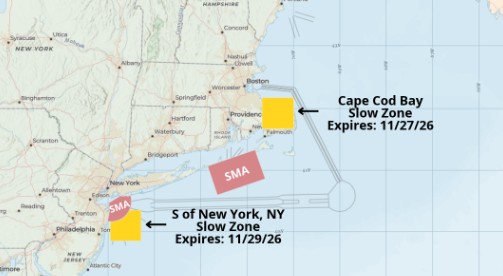
The National Oceanic and Atmospheric Administration (NOAA) has announced that a voluntary Right Whale Slow Zone in Cape Cod Bay will remain in effect through November 29, 2026.
The extension follows the November 14 redetection of right whales in Cape Cod Bay by a buoy operated by the Woods Hole Oceanographic Institution (WHOI).
Under the voluntary slow zone guidelines, mariners are requested to avoid the affected area or travel at speeds of 10 knots or less to reduce the risk of collisions with the endangered whales.
NOAA Fisheries says vessel strikes are one of the leading causes of injury and death for North Atlantic right whales. Reducing vessel speeds can lessen the severity of collisions and give boat operators more time to avoid striking a whale.
Federal regulations also prohibit vessels from approaching or remaining within 500 yards, or approximately 1,500 feet, of a North Atlantic right whale.
The latest detection comes as the endangered species continues moving along the Atlantic coast.
North Atlantic right whales remain among the world’s most endangered large whale species, with approximately 380 individuals remaining, including about 70 reproductively active females.
The species faces ongoing threats from vessel strikes and entanglement in fishing gear.
Mariners are encouraged to remain alert for whales and follow recommended speed restrictions when operating in Cape Cod Bay.
Additional information about active Right Whale Slow Zones and Dynamic Management Areas is available through NOAA Fisheries.
Copyright Pitta Media Group 2026. Any unauthorized use not permitted. All rights reserved.