



Sony recently took a very bold stance on physical media. They’ve stated they will cease production of physical copies of video games for PlayStation consoles in January 2028. This is ironically close to another announcement about removing access to over 500 Studio Canal movies purchased via user’s PlayStation accounts. This causes a lot of confusion about the duration of a digital product when you have no control over it.
Just as Sony tries to advance the dominance of digital purchases of PlayStation video games, movies purchased in digital format will be removed from user’s libraries due to an expiring licensing agreement. This brings up some obvious questions about how we define ownership and when we “buy” something… do we really own it?
Spoiler alert: No we do not.
I’ve been a PlayStation fan since its first console released in 1995. Sony’s PlayStation made a dramatic change to video gaming with the release of that first console. While video games had been advancing since the early 1970s, the vast storage space of an optical disc opened up many new possibilities. Over the years I’ve purchased many games as the PlayStation evolved.
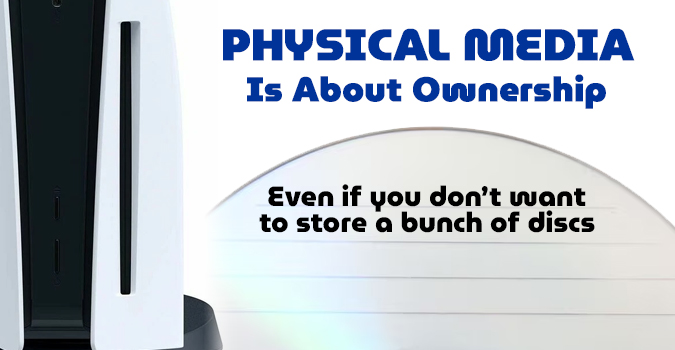
Growing up with an Atari game console, I was accustomed to having a physical collection of video games and didn’t have any interest in digital games when the option was presented. All the games I bought were either on discs or cartridges – media that can sit on a shelf in my house.
I understand the convenience of digital media but forcing that model onto all gamers seems misguided. Not everyone wants shelves full of games, but that isn’t the only difference between digital and physical copies.
Physical games can be lent to a friend.
Physical games can be sold or traded.
Used games makes gaming accessible to many more people.
Digital games do none of these things. When the concept of digital video game purchases was introduced, we were told the prices would be much cheaper than physical copies of the same game because there was no physical distribution, packaging, or retail space. That never happened and digital copies have kept pace with the increasing prices of physical games.
Another consideration is the integrity of media when only available in digital formats. Books are banned when those in power disagree with written words. Digital media – from games and books to music and movies – are edited. Things they don’t like are edited or removed all together. Media sitting on your bookshelf never changes. The same cannot be said for digital media sitting in the cloud.
As you can imagine, Sony has been met with backlash and opposition to the announcement about dropping physical media. Combined with the complexity and duration of license agreements, digital sales seem less guaranteed in a changing economy.
With Sony’s announcement to cease physical video game releases, one must wonder when physical media will end for music and movies. Do you own physical games?
How would you feel about a world without physical media?
By CapeCod.com staff