




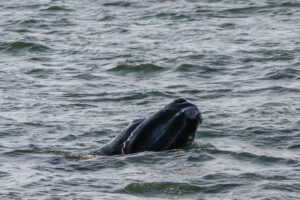
A right whale calf shows its head during the 2022-2023 breeding season. Photo credit: Andrea Spence/IFAW. Activity was
conducted pursuant to NMFS ESA/MMPA
Permit No. 21371.
PROVINCETOWN – Scientists and advocates are celebrating following The North Atlantic Right Whale Consortium‘s encouraging announcement that the official population estimate for the critically endangered species has risen to 384 for 2024.
The findings represent a 2.1% increase over the recalculated total for 2023 and includes 11 calves borne in the one-year period.
Despite the announcement, things remain fraught for the beleaguered marine mammals, with particular concern for the number of breeding females amidst ongoing human threats from vessel collisions and fishing line entanglements.
In many cases, female right whales that escape fishing line entanglements can reopen the scars from their entanglement during pregnancy; such hemorrhaging can become severe and poses mortality risks that threaten the species with functional extinction even if their dwindling numbers continue to linger.
“We are pleased to see, for the fourth year in a row, that the population estimate has not decreased,” said Kathleen Collins, senior marine campaign manager at the International Fund for Animal Welfare (IFAW). “However, we remain adamant that more needs to be done to safeguard this vulnerable species.”
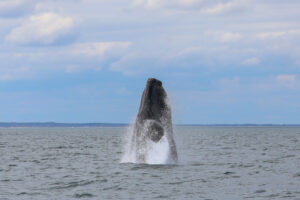
A North Atlantic right whale breaches in Cape Cod Bay. Photo credit: IFAW, NOAA permit #21371
Collins pointed to promising technological advancements such as advanced whale monitoring aboard ships – which exist alongside on demand fishing gear and improved first aid for injured whales – as promising but insufficient on their own.
Right whale advocates have called for legislation to reduce vessel speeds in areas frequented by whales and research and recognition of shifting migration routes for the species as critical factors in restoring their numbers.
“Annual calving rates remain under the necessary threshold to grow the population,” said Collins. “A lasting recovery is impossible if current trends and mounting threats continue. This population of whales is unhealthy, stressed, and unable to save themselves.”
“The responsibility falls to us; we need to do what’s right.”
 About Matthew Tomlinson