




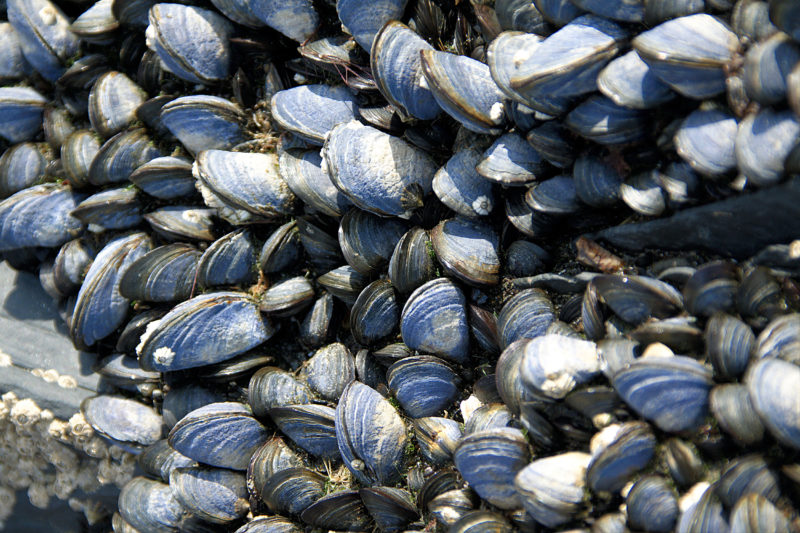
COURTESY OF THE BUZZARDS BAY COALITION
NEW BEDFORD – Toxic pollution in Buzzards Bay has decreased dramatically over the past several decades and mussels can be thanked for playing a vital role.
For the last 30 years NOAA’s Mussel Watch program has provided the Buzzards Bay Coalition with data to track toxic pollution.
As mussels feed they absorb toxins that are in the water and sediments.
The toxins accumulate over time which becomes an excellent indicator of pollution levels in particular places because mussels don’t move around like fish.
The Coalition publishes its “State of Buzzards Bay” report every four years with much of the data coming from the federal Mussel Watch program.
The report is compiled with mussel data from Gooseberry Neck in Westport, the Cape Cod Canal and in West Falmouth.
These locations have the longest record of Mussel Watch data going back more than two decades.
About 80 percent of the data used for the Coalition’s report comes from the three locations.
The 2015 report, released last summer, received a toxic pollution score of 52 out of 100.
The pollution levels in those three areas have decreased slightly since the first report was released 13 years ago.
 About CapeCod.com NewsCenter