




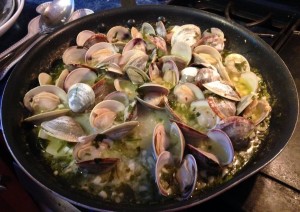
BOSTON – The Massachusetts Division of Marine Fisheries has declared certain areas of Boston Harbor safe for shellfishing for direct human consumption for the first time in a century.
In 1925, a national typhoid epidemic caused by the consumption of contaminated oysters led to the closure of almost all of Boston Harbor to shellfishing.
Since that time, only specially-licensed harvesters have been permitted into certain areas to access moderately-contaminated softshell clams, which then go to a purification facility.
But the state says the water quality has improved thanks largely to the multi-billion-dollar cleanup of the Harbor.
Officials say the reopened areas include some of the most productive shellfish habitats in the state in parts of Winthrop, Hingham and Hull.
“Not only will this be a tremendous boon to residents of the three towns, but also to other Massachusetts residents interested in recreational shellfishing,” said the DMF. ”
The DMF says commercial and recreational shellfishers will be allowed to harvest for their personal use or for direct sales.
Because Massachusetts is a home rule state, and because Winthrop, Hingham and Hull have no history of managing shellfisheries, the state says some additional steps are required before they can allow shellfishing in their communities. They include coming up with a local sustainable management plan, a local permitting system, and the hiring of a shellfish constable.
The DMF is providing assistance to the tows, and expects the areas to begin opening to shellfishing later this year.
“Re-opening these areas to shellfishing is one of the strongest indicators yet that the decades-long Boston Harbor clean-up was a success. We hope this trend continues and we can re-open additional areas of Greater Boston Harbor in the future.”
By Jim McCabe, CapeCod.com NewsCenter
 About Jim McCabe