




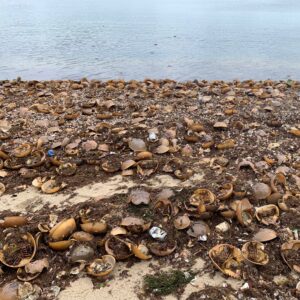
Picture of horseshoe crabs provided by MA DMF.
FALMOUTH – The Massachusetts Division of Marine Fisheries says it recently received reports from concerned citizens about unusual numbers of dead horseshoe crabs washing up on beaches.
The initial calls came from Falmouth, Weymouth and Nahant.
The DMF investigated and found the crabs were not dead, but they were exoskeletons cast off by the crabs during their molting process.
Late summer/early fall is the peak of horseshoe crab molting season, so the state expect the number of molted shells on Mass beaches to increase over the next few weeks.
To tell the difference between a dead crab and a molt, look for a slit along the front rim of the shell. This is where the crab split and exited its old shell. Crabs will molt multiple times per year over their first 3 years of life, and then once per year until they reach sexual maturity at around 9 to 11 years, at which point they stop molting.
More info about the crabs is available on the Mass DMF website.
By Jim McCabe, CapeCod.com NewsCenter
 About Jim McCabe